Prime Mover
A VR workout you ride. You squat to drive a handcar along a track that climbs, drops and collapses around you. I designed, built and shipped it alone, to find out whether a strange enough world could make exercise stop feeling like exercise.
Work from 2015–2016. Diagrams redrawn in 2026. See the originals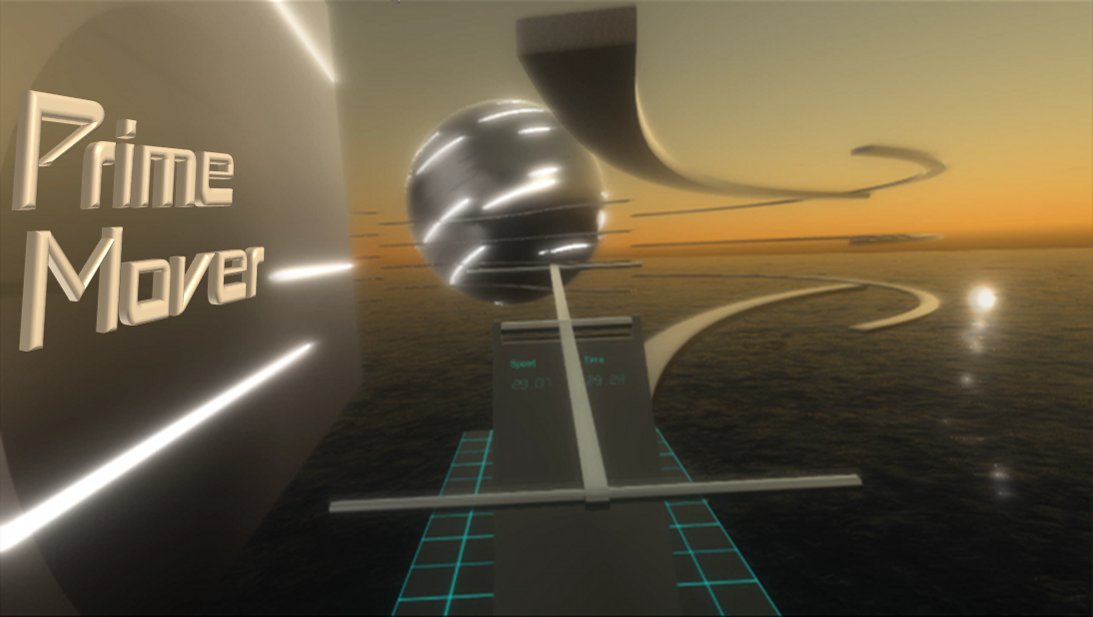
Exercise is tedious, and most people can’t keep it up.
When consumer VR arrived, it was full of shooters, rides and films, and almost nothing for fitness, even though the Wii had already shown people will sweat for a game. My bet: an intriguing, reality-defying world, with obstacles and goals to chase, could pull attention away from the monotony and discomfort of a repetitive but effective workout.
Eight months, from learning the tools to a public release.
First, where people already exercise and where VR already was.
- Cardio-machine screens had barely changed, and inspired no one.
- Shifting your attention to a phone app mid-workout was hard to do safely.
- Music’s mood and tempo strongly set people’s energy.
- Distraction media could backfire and make people feel more tired.
- First-person fly-throughs on a small screen didn’t convince anyone.
- Shooters, rides and immersive films were everywhere. Fitness wasn’t.
- Tethered headsets badly limit quick movement.
- Wireless headsets lacked enough body tracking.
- A fixed visual anchor reduces motion sickness.
- A gaze reticle is a poor way to interact in 3D.
The hardware decided the game.
The Oculus DK2 tracked only your head, and only while you faced its camera. Instead of fighting that, I designed for it. Every limit became a rule of the game.
A squat is the accelerator.
The headset reads each squat as a dip in head height, and each dip pushes the handcar forward. Squat faster and you go faster. Stop and you coast. Jumps sit on a gamepad button, so legs stay planted.
Two short tutorials, then the ride.
Every asset, model and script, made by me.
Novices first, then experts.
From a developer kit to a store listing.
When the consumer HTC Vive arrived, with sharper screens and better tracking, Unity made the port straightforward. Prime Mover passed HTC’s usability and bug testing and went up on Viveport as a free download. Players’ praise and complaints drove several maintenance releases in the months after.
What I'd keep, and what I'd do differently.
- Treating hard limits as design rules instead of problems to work around.
- Building in the real medium. A headset answered questions no mockup could.
- Testing with novices and experts, because they notice different things.
- Measure the workout itself, such as squats per session and session length, so the bet about distraction could be tested.
- Test longer sessions, where fatigue and motion sickness really show up.
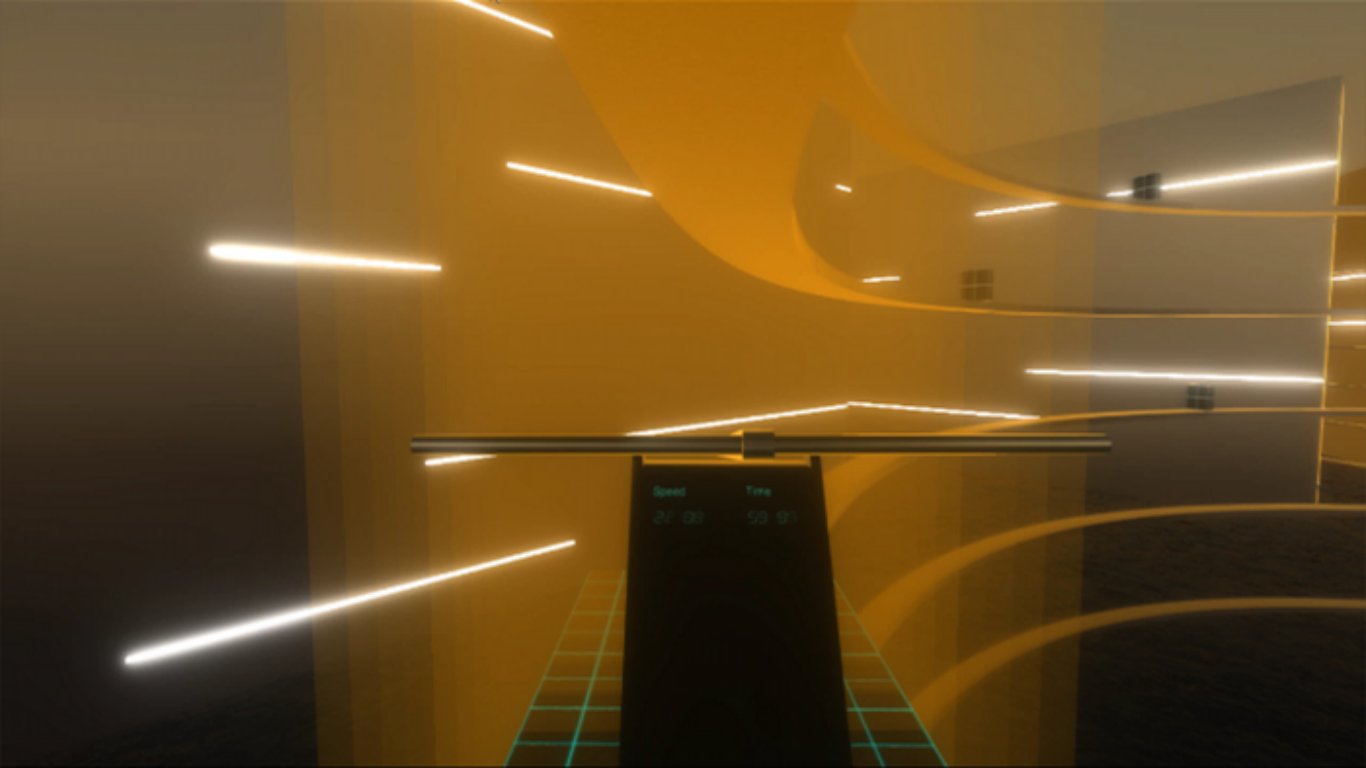
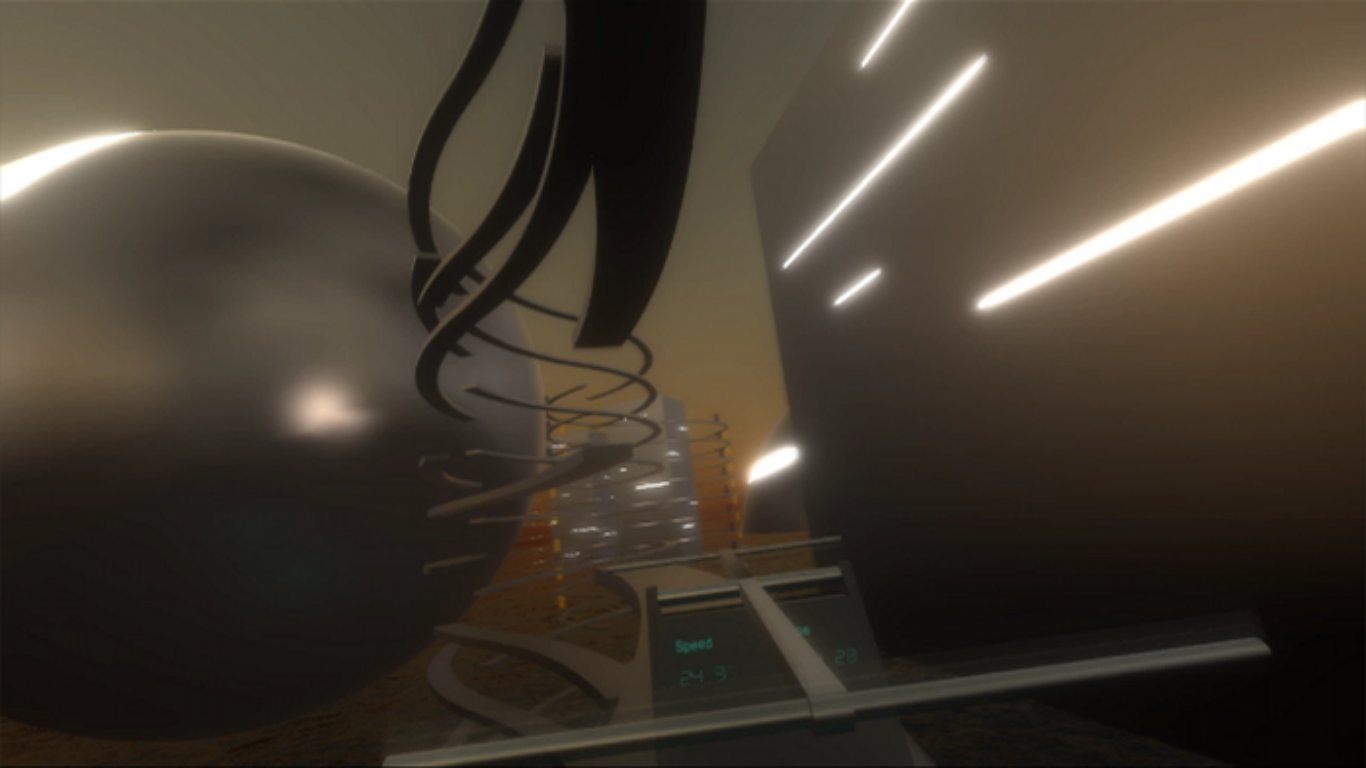
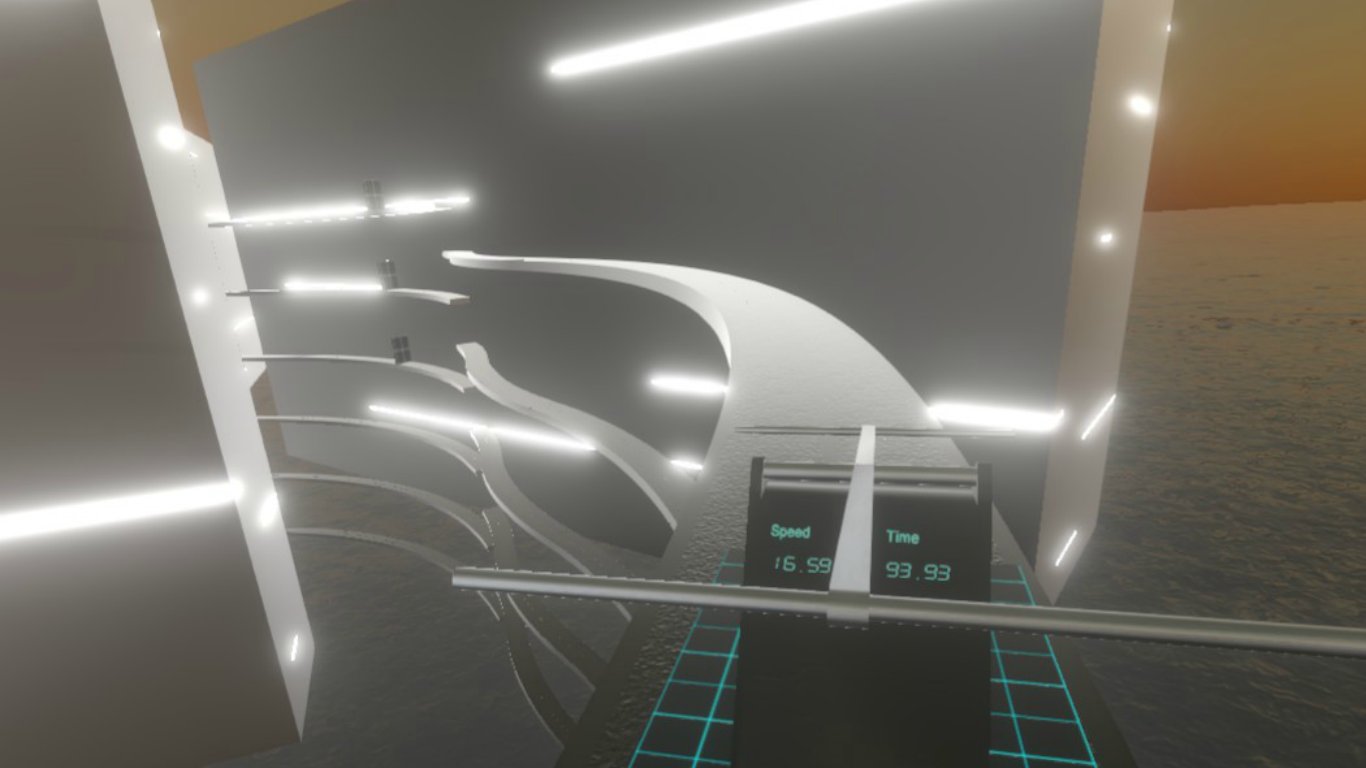
The real artifacts, as made at the time.
The diagrams above were redrawn in 2026. These are the originals: the mood board, flow and mechanics diagrams, 3D models, scripts, test footage and screens from the shipped game. Select one to see it larger.